Abstract
Purpose — This paper aims to study, understand and elucidate the digital transformation of retail banks in the UAE, and to identify its key components and their interrelationship. The paper further proposes theoretical and executive directions of international worth and application, particularly in Asian countries of comparable business contexts.
Design/methodology/approach — A quantitative study design was used using an online instrument, with a sample size of 367 respondents from the UAE, comprising retail banking professionals and customers. A conceptual model capturing the responses was developed to measure their impact on the dependent variable, and variance-based structured equation modeling was used.
Findings — The five independent variables of customer experience, service quality, automation, digital skills and regulation were measured through the literature survey. The results cleared the accuracy threshold, and eight hypotheses were found to be significant in delineating and explicating the variables’ direct and indirect associations.
Originality/value — The study presents new and original data that expand and refine our knowledge on the fast-evolving topic of digital transformation of retail banks. The findings offer both theoretical advancements and practicable directions, which focus on the UAE, and highlight substantial differences to generic international research. They further and inexorably build a solid foundation for scientific and executive application in the wider region and beyond.
Keywords — Digital transformation, Retail banking, Automation, Customer experience, Cybersecurity, Service quality, Compliance
Paper type — Research paper
1. Introduction
The global economy is dominated by the concept of digital transformation, but practitioners and scholars alike are still unclear on what this implies for well-established businesses. Digitally erasing known limits related to geography, industry and organizations has resulted in oversimplified descriptions such as digitization transforming all areas of business (Furr et al., 2022). The majority of commercial banks have introduced several plans to guarantee the digital economy. The main objective of commercial banks’ continued pursuit of the digital economy is to grow their clientele, which will raise reserves and lending accounts (Hakizimana et al., 2023). Almost all sectors, including the private sector, industry, education, banking and government, are being altered through digital methods during the Fourth Industrial Revolution (4IR). Globally, the banking sector has embraced the digitization potential that has come with the 4IR. Digital technologies are reshaping all aspects of business functions and their stakeholders. The strategic, managerial and organizational ramifications of digital transformation have garnered more attention in recent times from management scholars and multidisciplinary researchers (Dąbrowska et al., 2022). In the evolving landscape of retail financial services marketing, the digital age introduces both opportunities and complexities, especially concerning data security and user engagement. With the influx of digital platforms, the protection and effective utilization of burgeoning user data becomes paramount. Artificial intelligence (AI) and Big Data offer insights from numerous data sources, supporting strategic goals and fraud detection, while cloud computing provides scalable data processing (Hu, 2024).
Consumer requirements constantly increase through the influence of experiences offered by technology companies such as Apple, Amazon and Google, with consumers looking for comparable practices from the banking services industry. As the products and services offered by various banks are becoming identical, influencers of customer experience have shifted to focus more on the services provided as differentiators when choosing a financial services firm. Banks are inherently susceptible during a recession due to the potential for bad debts and, in severe instances, bank runs (Goodell, 2020). Banks can also leverage the metaverse to attract new customer segments, such as gamers and technology enthusiasts, by offering metaverse-specific products and services. While e-banking enables customers to carry out key banking activities anywhere and anytime, it is devoid of the personal engagement that one would get by going to the branch. In the metaverse, customers are to create a unique avatar for themselves and can have more interactions with the bank (Ooi et al., 2023). In the modern world, especially in the banking sector, innovation and the inclusion of technology are crucial components. An innovative culture (IC) encourages openness to new ideas and cultivates capabilities to embrace technologies behind product or service development (Al Issa and Omar, 2024).
According to a McKinsey survey in 2022, today’s retail banking market is very different than the earlier one where the traditional model of universal banking was economically sound. In the new world, the winning banks will be those that carefully choose the businesses in which they can lead. However, retail banks face challenges on the road to digital transformation. Heritage technology, increased dexterity, faster turnaround time to launch innovative products and services and dependency on information to enhance and manage consumer relations make digital transformation for banks more of a requirement than an option. Marketers and banks keep an eye on and exert influence over the internet touchpoints that are partially or completely beyond their control to foster purchase intention and develop brand trust. They should also redesign and oversee the physical store. Both offline and online brand trust positively influence buying intention (Nosi et al., 2022).
The banking sector has evolved to provide prompt and high-quality customer service using contemporary technology-based banking services including online, mobile and ATM banking. One of the most practical financial services is mobile banking, which makes it possible to include those who had previously avoided banking services in banking activities (Jahan and Shahria, 2022). At present, AI is being widely recognized for empowering digital transformation across various industries including financial services. AI is being used extensively to improve the productivity and level of engagement of retail banks that are pursuing digital transformation (Aithal, 2023). In an ongoing pursuit of innovation and financial prudence, banking institutions find themselves at the forefront of a digital revolution that goes beyond regular automation to redefine how financial services are delivered, experienced and secured. AI is increasingly being used in the banking industry to stay competitive and supply better customer support to the customers (Rahmani and Zohuri, 2023). For many years, the United Arab Emirates has established itself as a key global financial center and an important regional financial center. Recently, the United Arab Emirates has witnessed a new impetus to transform the effort leading the nation toward being an international invention hub, with the unveiling of numerous plans in that direction. This makes questions on determinants of digital transformation in the retail banking sector very timely and critical.
Artificial neural network systems are being used by financial institutions more and more to identify fraudulent activity and charges that don’t add up. AI is used for managing properties, investing in stocks, maintaining accounts, organizing transactions and optimizing portfolio. Instead of visiting the bank, people now use ATMs and pay using POS points rather than cash. AI supports in analyzing customers’ data to gain a deeper understanding of their needs and offer more developed and customized products. AI gives banking transactions a superior level of quality. AI may put some technical banking professions at risk because human resources can readily replace technology. However, AI hasn’t been shown to be able to replace emotional intelligence when it comes to managing the relationships between employees and clients in banks (Boustani, 2022).
The implementation of a digital strategy by retail banks is an intricate process that requires management attention. The approach that banks need to adopt should be holistic and comprehensive. Retail Banks need to formulate a plan that encompasses innovation by clearly stating how their improvement endeavors are aligned with achieving the organization’s goals. The aim of this research is to close an extant research gap by studying, understanding and elucidating the digital transformation of retail banks in the UAE, identifying its key components and interrelationship and proposing theoretical and executive directions of international worth and application, particularly in Asian countries of comparable business contexts.
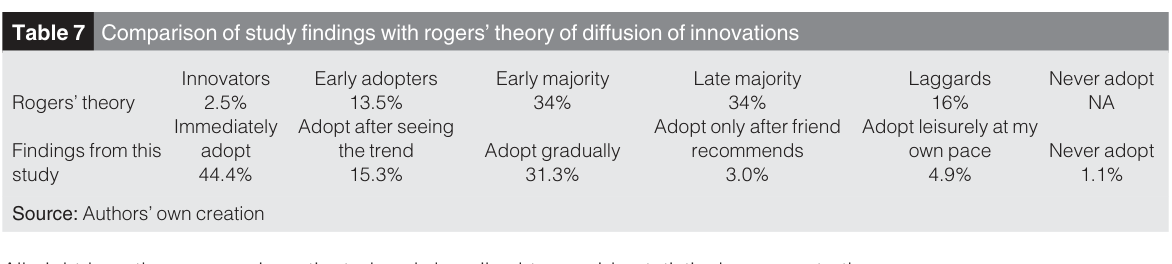
The research investigates the various factors that impact digital transformation in retail banking and the benefits thereafter. Since the theory is closely related to innovation, the diffusion of innovations theory, introduced by Rogers (2003), has been used. This theory explains how members of a society communicate about innovation over a period. A conceptual framework is presented showing the contributions of the factors that drive digital transformation. The research should support the retail banks in the UAE to establish the optimum solution when implementing plans pertaining to digital transformation initiatives to achieve their strategic goals in the financial services industry. The impact of service quality on the UAE’s retail banks retail transformation, along with the role of automation in retail banks, is analyzed in this thesis. In addition, the role of digital skills and regulation in the digital transformation of UAE’s retail banks is also included in the research. Finally, the study aims to evaluate if the study findings contrast with Rogers’ theory of diffusion of innovation.
2. Theoretical foundation and hypotheses development
Any research project requires a thorough review of the literature to identify critical and contemporary knowledge and prevailing patterns of research. This section details the literature review approach describing the method of identifying research gaps in subsection 2.1. A detailed review of the five independent variables is described in subsections 2.2 to 2.6 along with the hypothesis formulated. The conceptual framework is explained in subsection 2.7.
2.1 Variables
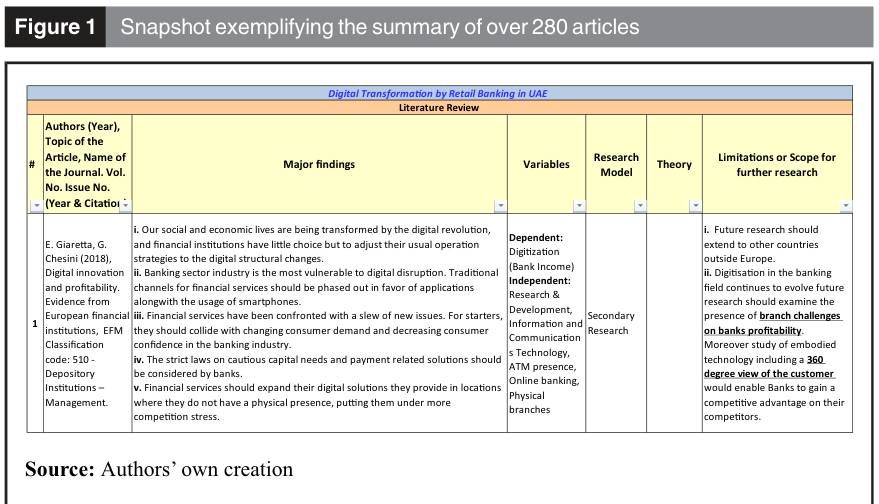
The literature review provides a framework for learning advancement, supports the formation of theory and bridges maturing fields of research with new areas of research. It documents all previous research on the topic, provides an in-depth introduction to the topic and presents all the analyses and conclusions of previous research. It defines the foundation upon which current research can be based. It helps to form research models and generate hypotheses for experimental testing, thereby guiding discoveries and analysis. The research can then make a valuable contribution to the knowledge base, either by its new findings or by endorsing or contradicting previous research. A map of research gaps and research findings in the existing literature was made to locate this study. Research gaps are crucial for discovering different facts and adding to the existing body of knowledge. More than 280 entries were entered into an Excel spreadsheet across all six variables (five independent variables and one dependent variable).
Figure 1 shows how each research paper was summarized and analyzed to enhance the analysis and search results. The gaps were identified from each paper and were used to develop the study constructs.
Mapping the research gaps helped infer the determinants of digital transformation in the UAE’s retail banks. The five independent variables that were identified are listed below:
- Customer experience (CE)
- Service quality (SQ)
- Automation (AT)
- Digital skills (DS)
- Regulation (RN)
The dependent variable was digital transformation (OM). The benefits of digitization were used as a measure of research outcome.
2.2 Customer experience (CE)
The customer-centric business model has emerged as a significant new trend in the retail banking industry in recent years. Improving the customer-oriented behaviors and engagement of frontline service staff are important elements that impact business performance (Ghlichlee and Bayat, 2022). Digitization is leading to shifts in customer behavior, forcing organizations to re-examine their operating models, including changes in human capital (Chouaibi et al., 2022; Thrassou et al., 2022). Financial institutions are seeking new prospects related to changing customer requirements, the ongoing technological revolution and changing workforce needs. To remain competitive in the market, banks need to continue to invest in digital tools to meet customer demand and to align the associated processes. New players emerging in the payment business have created new competitive threats for banks. Customer experience is a competitive battlefield, but it is very broad when defined so companies often find it difficult to define, implement and measure. According to a study conducted by Nasution et al. (2023), customer co-creation has a positive and significant effect on electronic word of mouth. Customer co-creation should result in the customer’s desire to be more committed and trust in banks. Also, customers will believe in the differentiation of the bank making it a competitive advantage in the banking industry.
Digital disruption is causing shifts in customer experience and management practices. The key influencer of digital transformation for many organizations across sectors, including retail banks, has been customer experience and management, which include approaching and interacting with the target customers in an optimum manner (Haruna, 2020). The growth in sales has also been aided by the benefits of internet purchasing. E-payments are increasing online retail sales as they have become a preferred method of payment and expedite the payment procedure. They also reduce transaction expenses (Alzoubi et al., 2022).
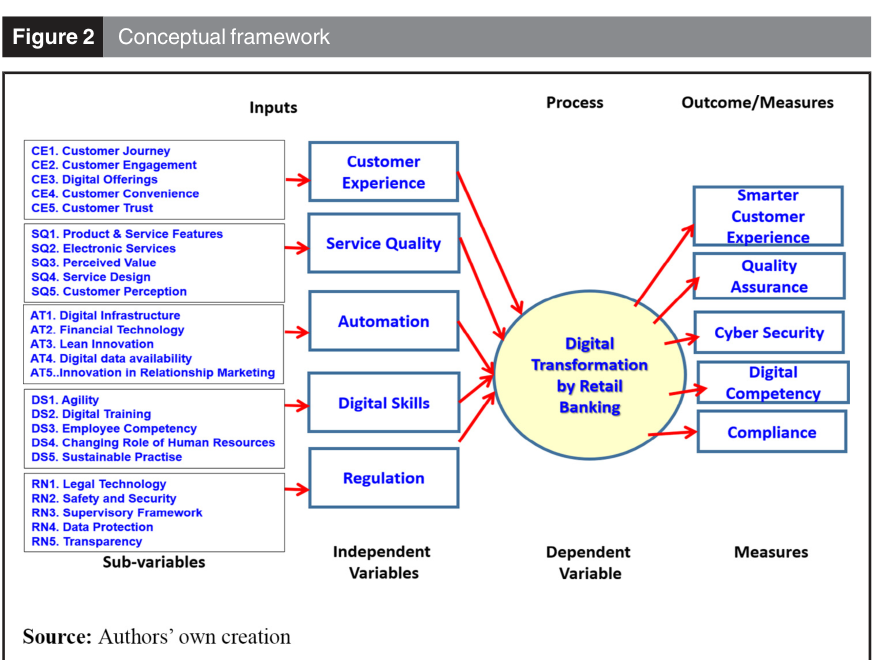
The foregoing literature review helped to determine the gaps in our knowledge of and gave us insights into the impact of customer experience on digital transformation through the identified sub-variables, specifically customer journey, customer engagement, digital offerings, customer convenience and customer trust. Based on the above arguments, we develop the following supporting hypothesis:
H1. Customer experience (with its subdimensions of customer journey, customer engagement, digital offerings, customer convenience and customer trust) significantly influences digital transformation.
2.3 Service quality (SQ)
Understanding the multi-channel retail business environment is necessary to identify the degree to which quality services can be offered and to understand the requirements of different customer segments. Multi-channel consumers have many requirements in terms of the level of service they received from retailers. These requirements are characterized by different components, namely quality of service and physical, online and integrated value. To provide a seamless quality of service, the retailer should offer a total experience that is similar for the customer across all touch points (Patten et al., 2020).
Today’s market is shifting mainly from industry to the information age. This is reflected in technology-enabled customer service features (e.g. invoice payments, inquiries, account record updates and order tracking), purchase transactions (retail and inter-company), learning and information exploration. The author proposes future research to find out how service providers can use digital technology to drive effective implementation of service design, including effective collaboration with customers (Opute et al., 2020).
In the financial services industry, it is important to understand the effect of e-banking service quality on customers’ loyalty. Electronic Banking is transforming retail banks by supporting growth and innovation, in the competitive marketplace (Ayinaddis et al., 2023). The level of perfection in service performance is known as service quality, and it is widely acknowledged as a critical success factor for businesses looking to stand out and compete in the market. Service quality is becoming increasingly important for the design of successful and high-growth service industries – especially banking services – and is unanimously seen as an important competitive factor. Customer satisfaction, business image, behavioral intentions and perceived value are all significantly influenced by service quality. The greatest factors influencing behavioral intentions are client happiness and service excellence (Hossain et al., 2023).
Reviewing these previous studies highlighted the effects of service quality on digital transformation. These include product and service characteristics, electronic services, perceived value, service design and customer perception. Based on the above arguments, we develop the following supporting hypothesis:
H2. Service quality (with its subdimensions of product and service features, electronic services, perceived value, service design and customer perception) significantly influences the digital transformation.
H3. Customer experience mediates the relationship between service quality and digital transformation.
2.4 Automation (AT)
Digitalization is a key strategy that retail banks use to reach their objectives. Banks are troubled by rigid, outdated technology and its related infrastructure, all of which makes transformation extremely difficult. New digital technologies and innovations are driving companies toward digital transformation as competitors threaten to gain an advantage by adopting these technologies.
The financial services industry is facing an era of unprecedented changes. Financial technology firms are able to push transformation with speed and understanding without impacting the decision to modify core technology systems. Digitization is recognized as a powerful driver of the platform ecosystem. As roles become more digitized, the platform’s complexity grows as it connects to numerous social and technical settings, resulting in different collaborations and information exchanges. The authors believe that this research will facilitate future studies’ identification of additional complex patterns and mechanisms, advancing a broader theorization of the impact of digitization on platform migration (Sandberg et al., 2021).
Though banking displays different political dynamics than the car-for-hire industry, financial technology, or fintech, is frequently referred to as the “Uber of banking.” Fintech banks are only one example of the industries that fintech might disrupt. Even though it is still in its infancy, open banking offers an example of how fintech might upend incumbents by offering specialized financial services in place of well-established banks. Large digital firms like Apple and Google are already involved in the financial services industry and may someday become fintech banks (Hodson, 2021).
Nowadays, companies are investing resources to reduce operating costs and increase productivity. This is where AI rises as a pleasant option; it is much faster, more reliable and has less risk of error than a human. Virtual assistants, chatbots, holograms and body robots will upgrade over the years to flood the market with all the technology at a reasonable price. AI is increasingly being used by retail banks to reinforce monetary services. Customers are more likely to take the digital course to stay up to date with their bank accounts and make transactions. With such benefits, banks will certainly adopt AI to stay competitive and supply better customer support (Umamaheswari and Valarmathi, 2023).
To effectively handle the opportunities and difficulties posed by fintech and digital transformation, banks must have a thorough understanding of the evolving banking industry and the effects of technology breakthroughs (Mogaji, 2023) Effective customer relationship management is necessary to create company partnerships that are client-driven. A crucial element helps a bank to increase the number of its clients and deal volume. AI is now an integral part of modern CRM systems. Due to Visit bots’ convenience and simplicity, the younger generation is using AI-driven innovation more frequently. Customers prefer online banking services and use these services mainly to manage their money when traveling overseas (Shaik et al., 2023).
Those studies revealed insights that can be used to determine the impact of automation on digital transformation, including innovations in digital infrastructure, financial technology, lean innovation, digital data availability and relationship marketing. The following hypotheses were formulated:
H4. Automation (with its subdimensions of digital infrastructure, financial technology, lean innovation, digital data availability and innovation in relationship marketing) significantly influences the digital transformation.
H5. Customer experience mediates the relationship between automation and digital transformation.
2.5 Digital skills (DS)
In the digital age, businesses are changing the hiring process and building competencies for a new group of workers. Highly skilled professionals with specific knowledge are required for digital disruption. The challenge is to design a structure for these interactions that offers a compelling value proposition, encouraging workers to stay and perform at their best.
Companies need to interact with external customers and stakeholders in a targeted way. Agile teams can gain a competitive advantage as organizations adapt to the ongoing COVID-19 crisis. Such teams are usually suitable for times of turbulence because they can adapt to rapidly changing business priorities, disruptive technologies and digitalization. The move to a remote work environment was a dramatic change, especially for agile teams (Comella-Dorda et al., 2020).
A workforce prepared for digitalization is essential for the complete development of a regional digital economy. To conclude the digital divide, SEA nations should increase connectivity through a broadband revolution throughout the region and providing their workforce with the digital skills and adaptable attitude needed to embrace digitalization. The goal of SEA countries should be to educate the younger and older generations to meet the growing need for lifelong learning and digital skills to improve digital inclusion. A more successful digital transformation project needs to balance the latest technologies, the right human capabilities, creativity, an innovative mindset and a sustainable business model (Ha and Chuah, 2023). Jobs are rapidly digitalizing (Zhang and Hon, 2020), and the need for a training program focused on productivity outcomes is critical to preparing the current and future workforce for digitization. Computer skills should be included in the academic curriculum. In the future, most businesses will be digitized, so understanding data and acquiring analytical skills will be similar to the work skills required today, such as using word processors and spreadsheets. Talent development on strategic flexibility and innovativeness. Moreover, strategic flexibility is an influential firm capability for innovativeness and financial performance (Kafetzopulous, 2023).
The gaps and results from the literature were used in this study to decide the impact of digital skills on digital transformation by examining agility, digital training, employee competency, the changing role of human resources and sustainable practice. The following hypotheses were formulated:
H6. Digital skills (with its subdimensions of agility, digital training, employee competency, the changing role of HR and sustainable practice) significantly influences the digital transformation.
H7. Automation mediates the relationship between digital skills and digital transformation.
2.6 Regulation (RN)
New dangers related to digital security, consumer protection, functional stability and fraud have emerged because of advanced digital frameworks. Existing procedures in the regulatory sphere do not handle these issues. Despite the rising prevalence of electronic health information, cloud-based maintenance and checking, there are various security challenges. Among these difficulties, assault or data burglary is a key test. Because of various security and protection challenges to maintain the client’s secrecy, a productive and adaptable plan is expected that guarantees the divulgence of data to specifically approved stakeholders. The proficiency of the proposed work can be additionally improved by joining quantum registering to make it more versatile for portable and smart gadgets (Shabbir et al., 2021).
Following the European Union’s general data protection regulation (GDPR), which emphasized employee information privileges that previous security insurance regulations disregarded, Dubai International Financial Center’s data protection law was introduced in October 2020. This is expected to administer worker observation and to screen client protection. Regulations eliminate barriers to competition and incentivize banks to reprice their services to attract consumers who are better at serving the needs of different customers. An increase in regulatory costs imposed on banks can increase confidence among existing and new customers thereby providing the bank with a stronger competitive advantage (Saar et al., 2023).
Concerns about security and trust in mobile banking have a big influence on how consumers perceive the use of these services. Banking customers are relying on mobile banking since it’s quick, easy to use and effective. Concerns regarding the security and privacy of personal and financial information have arisen among users with the increase in the use of such non-branch banking services especially after COVID. Banks should focus on comprehensive measures related to customer safety. These could be multifactor authentication, encryption and biometric identification (Rao and Suvarna, 2023).
Growing new administrative approaches is a troublesome interaction since administrative arrangements should be directed by customers’ inclinations. The protection conundrum demonstrates that buyers’ Web-based conduct regularly goes against their communicated inclinations for protected, secure and private Web-based connections (Hermes et al., 2020). The authors state that data alone do not continuously change conduct. Consequently, future work could investigate which further types of guidelines are important in that they change buyer conduct and give a level ground among firms that adapt individual data. Digital banking systems have made things more convenient for customers, but their general adoption has been hindered by the rise in cybersecurity dangers and privacy issues in today’s digital transactions, particularly online banking. Retail banks must implement robust security techniques and enhance education and awareness among customers (Cele and Kwenda, 2024).
From reviewing the papers, this study investigated the influence of regulation on digital transformation, involving legal technology, safety and security, supervisory framework, data protection and transparency. The following hypotheses was formulated:
H8. Regulation (with its subdimensions of legal technology, safety and security, supervisory framework, data protection and transparency) significantly influences the digital transformation.
2.7 Conceptual model development and Rogers’ theory of innovations
The senior management of corporations need to formulate a strategy that encompasses innovation by clearly stating how their improvement endeavors are aligned to help achieve the organizations’ goals. This exercise should assist them in trade-off options to find agreement as to which approaches are relevant to achieving the desired goals and are supported by all units within the organization.
Establishing appropriate human connections, thoughtfully assessing business procedures, goods and services, integrating information technology with information processing capability and fostering customer synergy are all components of customer engagement. To adapt to these rapidly changing environments, to show successful performance, it is necessary to turn to the human element, especially customers, to differentiate or differentiate in a competitive environment. Therefore, customer interaction is a factor that increases competitiveness (Telli et al., 2022).
Organizational transition is difficult with digital transformation. With the resolute backing of middle management, it must originate at the top and spread downward. Before starting this path, businesses must address their leadership, vision and dedication to the cause. The primary component of this change is technology (Solanki, 2022).
Bringing the findings of the preceding theoretical research into a comprehensive schema as seen in Figure 2 below we hereby develop the preliminary conceptual framework of our work, which also constitutes our working research model, including the independent and the dependent variables.
Rogers’ theory of diffusion of innovations is an appropriate theory for investigating the reception of innovation in advanced environments including digital transformation (Sahin, 2006). Since much dissemination research includes developments in innovation, Rogers (2003) normally used the words “innovation” and “advancement” interchangeably. A new segment, identified as those who would no way accept technological innovation, were included in this research under the option “never adopt.” The Rogers theory of diffusion is optimal as it should aid retail banks to understand the extent of acceptance of digital innovation by stakeholders.
3. Research design
The study was conducted using a cross-sectional time horizon technique (Saunders et al., 2016). The study shows the transformations that the retail banking industry has gone through after COVID. The researcher has attempted to remain impartial and conduct a fair analysis. Gaps in the literature were identified through secondary data sources, thereby positioning the research, setting the foundation for the generation of hypotheses and formulating the research model. The secondary sources identified five individual distinct variables that affect digital transformation of retail banking in the UAE. Furthermore, it explained the incorporation of Rogers’ theory of diffusion of innovations into this study.
Both primary and secondary data were collected for this research during its various stages, ensuring that the data were gathered in an ethical manner during all stages of the research process. Google Forms was used to administer the survey. After thorough due diligence, all 367 individuals were directly contacted through LinkedIn and email. The Emirates Institute for Banking and Financial Studies was also contacted to request their support in sending the survey to their customer database. Every survey inquiry from a potential or actual participant was answered carefully and to the respondent’s satisfaction. It was ensured that the background profile of the respondents met the target respondent definition and was genuine. Each survey respondent would only answer the questions once. The confidentiality of the research would be respected by the respondents by keeping the information of the study private and not sharing the survey items or even their own views with their colleagues. The questionnaire was constructed based on the gaps and results carved out from the limitations of earlier studies and the scope for future research they suggested. The ethics committee approved the project proposal.
The initial stage of the research was to analyze secondary data from earlier studies carried out by research scholars. Throughout the research stages, and even after the completion of the study, ethical issues were of the highest significance. These issues were research merit and integrity, informed consent, risk management, privacy and confidentiality (Diener and Crandall, 1978).
New emerging technologies are expected to have a significant impact on the research process in the future, especially in the areas of data collection and analytics, enabling researchers to assess data optimally providing the same on accuracy in the prediction of results. With the support of chatbots, field interactions and surveys, AI also aids in the construction of questionnaires. In the future, technology will transform secondary research. This may help to improve its efficiency and cost-effectiveness for users. If businesses wish to benefit from using AI and machine learning, they will need a sophisticated understanding of the tools, careful analysis of the risks and reasonable investments initially to avoid any value destruction (Canhoto and Clear, 2020). It is accepted that businesses’ best players will be those who adopt the best innovations and are the best storytellers, with a profound comprehension of human conduct and of the standards needed to handle information with speed and accuracy. Since AI-based solutions in management have become the current research focus, these need to be comprehensively understood by research scholars. Research carried out on the use of new technologies has demonstrated that these machines can mimic people by performing their given tasks intelligently. Because of the developing curiosity about AI among market researchers and specialists, these new technologies will be used in the marketing and research fields (Vlačić et al., 2021).
Information investigation offers a successful pathway to predict when and how organizations can plan solutions in this new time, using different big data strategies. Big data study has applications in fields such as the fate of work; new showcasing practices in changing customer behavior; inventory management or administration advancement and development, as well as difficulties in supportability; and administration and public arrangements. In these promising areas of study, a few open doors would allow more local investigations. Various rational methods could be used to assist the efforts being carried out around the world and closer to home to overcome the difficulties posed by COVID-19, offering long-term suggestions that would be relevant to global economies (Sheng et al., 2021). Innovation should support the research community to connect internationally with more extensive populations. What is to come will involve more complicated data and enormous information volumes; specialists will be sought after, such as data scientists who can break down complex information into more manageable and satisfactory structures.
Among the variance-based statistical tools available to date, partial least squares (PLS) path modeling is the preferred method The method is regarded as the most advanced and has thus been labeled as a silver bullet (Hair et al., 2011). It is usually the method of choice if the hypothesized model contains composites. ADANCO can evaluate models with a mixture of common and composite factors, whereas SMARPLS offers faster calculation speed and is easy to use when conducting variance-based SEM modeling.
4. Data analysis and results
4.1 Construct reliability
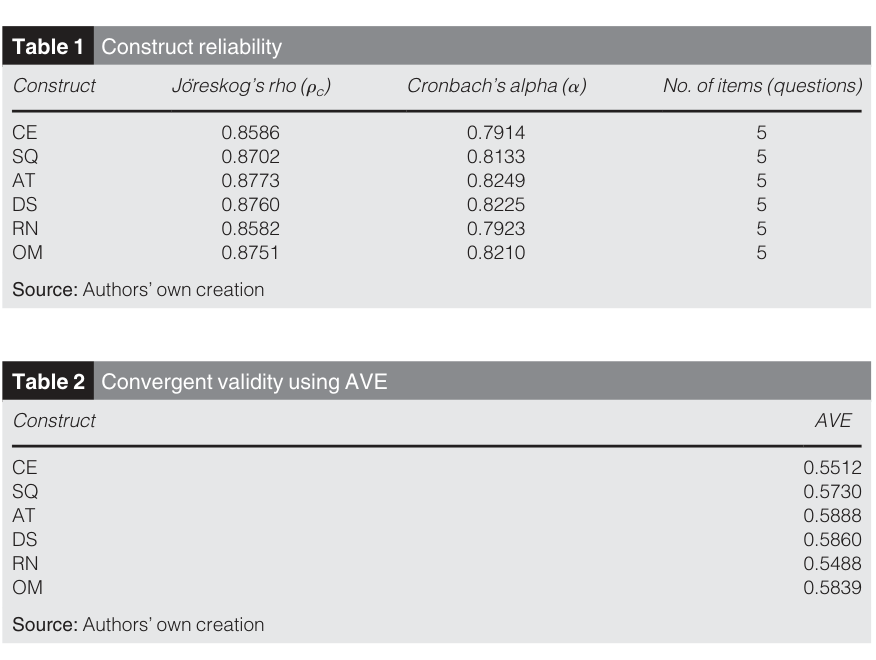
Construct reliability is the extent to which a survey can explain constructs for different parameters, such as internal consistency, and different points. The software tool ADANCO 2.1.1 provides construct reliability quotients as an output along with many markers – Dijkstra–Henseler’s rho (), Jöreskog’s rho (Werts et al., 1978) and Cronbach’s alpha (Cronbach, 1951). Construct reliability denotes a good reliability as well as validity, as presented in Table 1. As per the norms of Jöreskog’s rho, a value >0.9 is regarded as exceptional. In the case of Cronbach’s alpha, a value >0.6 is deemed adequate, but a value >0.7 is preferred.
4.2 Convergent validity
Convergent validity is a metric that determines how closely associated are two measures of constructs that are theoretically connected (Campbell and Fiske, 1959). Average variance extracted (AVE) serves as a measure of one-dimensionality that was used to assess the model’s convergent validity. An AVE value of 0.5 or greater is considered appropriate (Hair et al., 2011). All AVE values seen in Table 2 exceed the 0.5 cut-off level, implying the presence of convergent validity.
4.3 Discriminant validity
This metric determines the extent to which a construct is not connected or is factually not related (Campbell and Fiske, 1959). Standard is used to assess the discriminant validity of reflective measures, wherein the AVE of a construct must remain larger than its squared correlations, along with all constructs in the framework. Table 3 shows the loading for each construct’s assigned constructs and confirms that the model’s discriminant validity is within the acceptable range.
4.4 Indicator multicollinearity
Multicollinearity is determined with the use of the variance inflation factor (VIF). It is essential for researchers to ensure the absence of collinearity within the framework. The VIF should not be larger than 0.5 to examine the collinearity issue, otherwise there may be a possible collinearity problem (Hair et al., 2011). Some scholarly articles argue that stating a VIF value of less than 10 is an appropriate cut-off (Henseler, 2017). Table 4 shows the multicollinearity values for all variables.
The VIF values for each of the individual constructs in the PLS are less than 2.1231, well below the threshold value of 5 (Ringle et al., 2015), thus implying that there are no multicollinearity issues.
4.5 Structural model
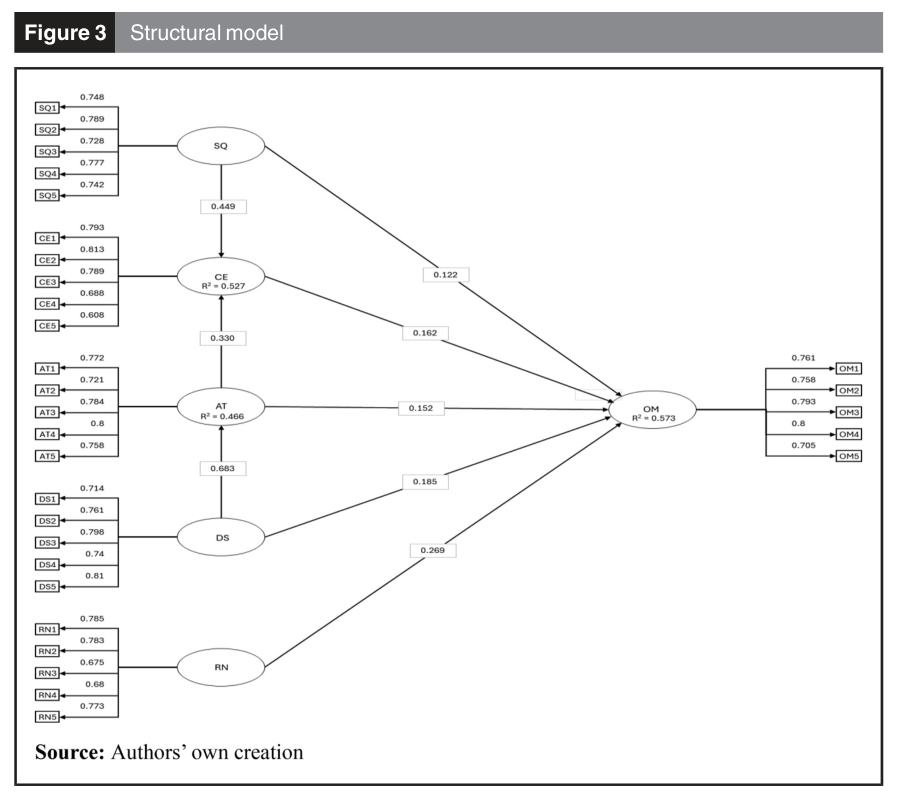
Figure 3 below presents the structural model.
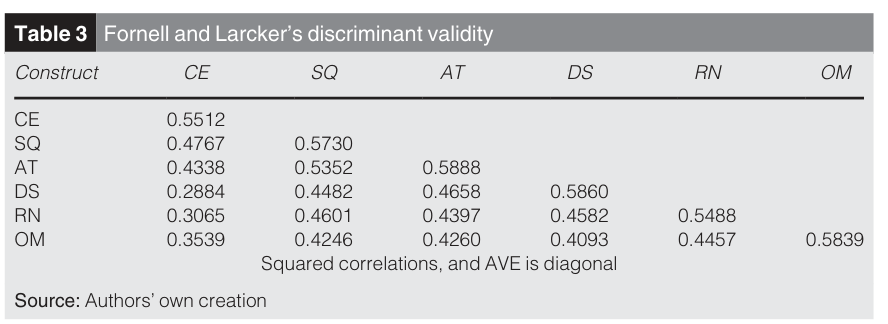
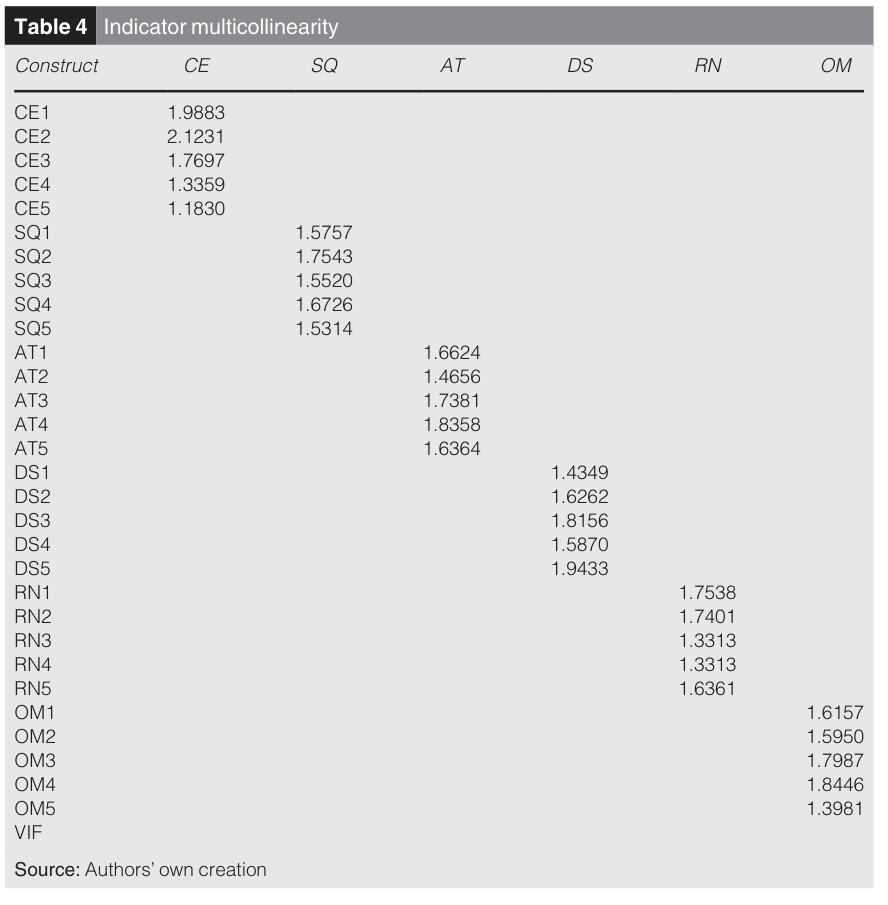
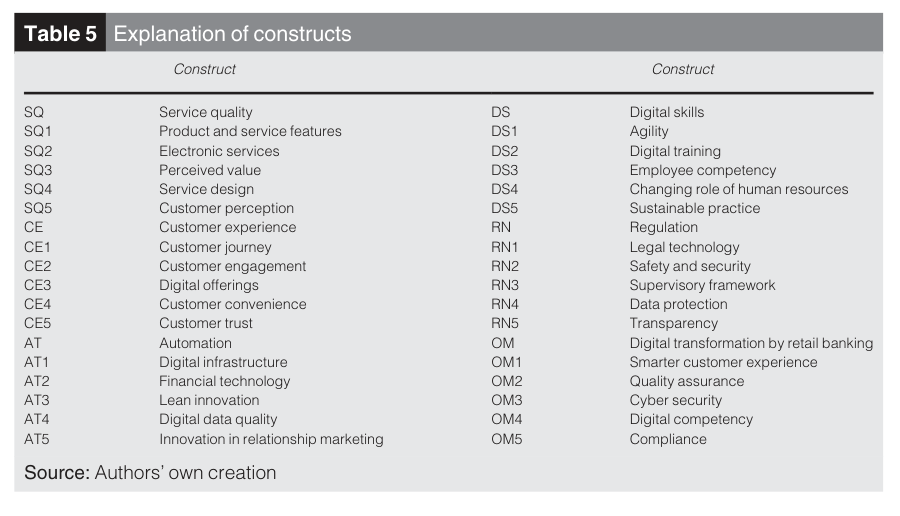
Table 5 below explains the constructs of the structural model to help in a better understanding of the model for all the five independent variables and the five measurement variables.
4.6 Coefficient of determination
With an R² equal to 0.573 for the digital transformation of retail banking in UAE (OM), the dependent variable reflects that 57.3% of the variance is significantly explained by all five independent variables. For a PLS regression model, this number is considered relatively high (Henseler and Fassott, 2010).
4.7 Assessment of hypotheses and path coefficients
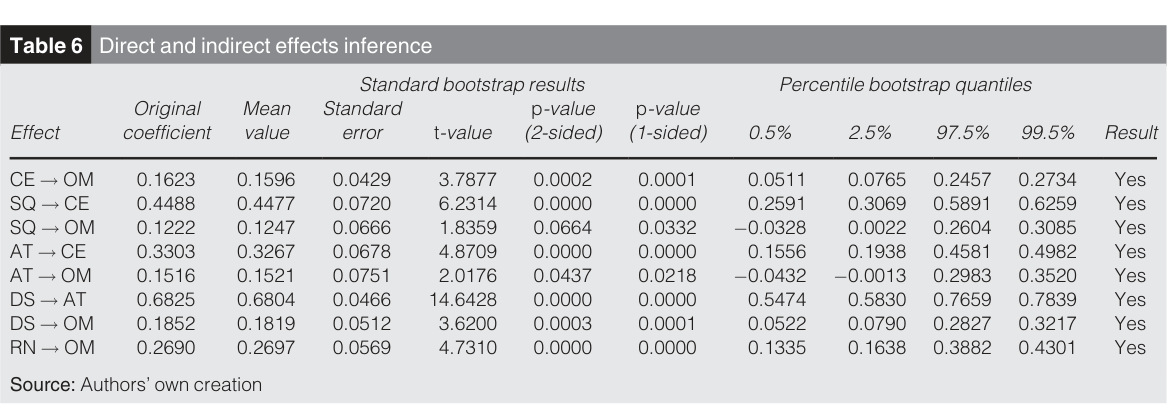
T-tests are crucial in assessing the significance of associations that exist within the model construct, according to a two-tailed t-test has been used in this study with 1%, 5% and 10% levels of significance values. A total of eight hypotheses were assumed in this study, which were assessed against the t-values of the independent and the dependent variables. Five of the eight correlations were found to be direct and three to be indirect.
Table 6 shows the results of the direct influence of the PLS for CE, SQ, AT and DS. While examining the path coefficient results in the case of SEMs, it is clear that PLS can underline genuine values. These results further explain that the PLS outputs could also be generalized to another independent data set. This indicates that regulation came through as the factor having the highest impact directly on digital transformation, with digital skills being second. The variable with the least influence on digital transformation was service quality.
4.8 Key findings
As seen in Table 7 below 91% of the respondents expressed that they would accept technology either immediately or in its early stages. The remaining 9% of the respondents stated that they would adopt technology either late or in a delayed manner.
The structural equation model was used to create and analyze eight cause-and-effect relationships. Five of the eight correlations between the independent factors and the dependent variable were determined to be direct, while three were indirect.
All but one of the direct linkages were empirically proved to have a meaningful impact on the dependent variable. Below is a summary of the direct and substantial impact of the five independent variables on digital transformation:
- Customer experience (βCE-OM = 0.1623; t-value = 3.7877)
- Service quality (βSQ-OM = 0.1222; t-value = 1.8359)
- Automation (βAT-OM = 0.1516; t-value = 2.0176)
- Digital skills (βDS-OM = 0.1852; t-value = 3.6200)
- Regulation (βRN-OM = 0.2690; t-value = 4.7310)
This indicates that regulation came through as the factor having the highest impact directly on digital transformation, with digital skills being second.
All eight hypotheses were investigated and described to provide statistical answers to the research concerns addressed. Appropriate insights have been drawn and shown against all specified objectives, backed by the entirety of the study findings. The study addresses the gaps in existing literature and confirms the previous findings from research authors in this area. However, this study goes beyond their findings and clearly demonstrates the impact of the sub-variables identified from the study gaps on the independent variable and how they influence digital transformation in retail banking. The findings from this study, along with the previous contributions it reviewed, have added to the existing knowledge related to both theory and industry practice. The analysis, thus provides a comprehensive and robust framework for ongoing conversations on digital transformation.
An organized approach toward digital transformation should support retail banking in its digital endeavors. Digital transformation by retail banking in the UAE is a detailed and complex process. This study will help banks ease the pressure of their implementation goals and strategies on digital transformation in the UAE. Further, this study will aid in the stabilization and consolidation of UAE retail banks’ digitalization activities. As a result, this study improves banking practice by boosting knowledge as means toward practicable ends.
5. Conclusions
5.1 Contribution to theory – consolidation of findings
The continuing belief in the diffusion of innovations acceptance levels being regularly spread was empirically tested by this research, which has now included “never adopt” as an additional segment. Interestingly, the outputs from Rogers’ theory (2003) study showed vast shifts in the curve with the majority of the respondents willing to accept technology promptly. This is a significant difference from the findings of Rogers’ theory (2003), which had one out of two people surveyed accepting technology either late or through a postponed approach. Because technology adoption trends have evolved since 2003, this is a unique contribution to the theory.
Organizations, banks, authorities, boards, policymakers and banking customers are all affected by the digital era. No company can escape the disruptive changes that technology has brought about in retail banking. Stakeholders are forcefully adopting radical innovative methods in diverse technology-based ways that were unimaginable in the past for most organizations.
5.2 Contribution to practice – executive implications
This study helps banks in easing the pressure of their implementation goals and strategies pertaining to digital transformation in the UAE. Because there is a scarcity of research in the UAE on digitization in retail banking, the findings of this study close that gap by giving a detailed framework that retail banking professionals could use to achieve their organization’s strategic intent. Retail bankers and experts who offer technology support to banks have many ideas to consider from the study results. While the banking sector has for quite some time been technology-dependent and information-concentrated, new information-empowered AI technology has the ability to drive advancement further and quicker. In the banking industry, where there are significant risks, a complex regulatory environment and an unquenchable need for individualized, safe and effective services, the critical role that AI has played a key role in this transition. Integrating AI into banking operations is not a mere technological upgrade but a strategic imperative.
Below is a summary of actions based on the survey results.
The findings generate higher levels of awareness within the UAE retail banking industry of the drivers of successful implementation of digitization within organizations.
The developed conceptual framework helps retail banks in the UAE to implement a digital transformation theory using a comprehensive method. This structured framework will shift retail banks from their existing practices of conventional and basic efforts in serving customers to the introduction of digital solutions with regards to service, automation, competency and regulatory modifications at the overall bank level.
Regulation has the highest influence on the dependent variable, driven mainly by safety and security, transparency and legal technology.
The study findings highlight concerns about cybersecurity threat and privacy issues that are common among consumers. Retail banks should focus on these areas when offering digital solutions to their customers. This is inclined by sustainable practice and employee competency.
An interesting finding is that digital skills are the second most important driver for digital transformation of retail banks. As a minimum requirement, retail banks expect digital knowledge skills from their applicants. Currently, the industry demands the development of new skills and qualifications to support its strategies.
5.3 Limitations and scope for future research
The research has some limitations, given that digital transformation is expected to continue to expand and there is now no turning back. More investigations may restrict this study because information from customers was gathered and public domain information remains unavailable or sensitive, making it impossible to access.
Only papers with gaps such as research constraints and potential research opportunities have been examined as part of the study. This may have resulted in omitting a few recent and pertinent pieces, even though technology is constantly improving. There was a potential that certain significant papers written in languages other than English were excluded, which may have resulted in the unintentional omission of certain variables required for the study. Additionally, this research followed a cross-sectional design approach, wherein the view of the situation at a certain point of time was considered. Though this approach was preferred to give a conclusive and definite evaluation, alternative approaches, such as a phenomenological design, may have led to a larger set of variables being included in the research.
Both technology and consumer needs have created a significant shift that retail banks have acknowledged and incorporated into their digital transformation programs. Researchers in academia and industry should focus on gathering data to develop a common measure correlating the use of technology amalgamation with the subsequent levels of enhanced digitization benefits. A future line of inquiry could include technologies such as blockchain and robotic automation in financial services to provide those services aimed at customer convenience.
The financial landscape is undergoing a profound transformation, and at the heart of this evolution is the relentless integration of AI into the core operations of financial institutions. The ongoing evolution of AI promises to redefine the financial ecosystem, adopting security and adaptability in an era where innovation, resilience and customer-centricity define the new normal.
Retail banks must respond to the labor market consequences of technology adoption by retraining and transferring employees on a wide scale. As employees interact increasingly directly with emerging machines, they will need to learn new abilities and be more adaptable.
References
Alzoubi, H., Alshurideh, M., Kurdi, B.A., Alhyasat, K. and Ghazal, T. (2022), “The effect of e-payment and online shopping on sales growth: evidence from banking industry”, International Journal of Data and Network Science, Vol. 6 No. 4, pp. 1369-1380.
Aithal, P.S. (2023), “An analytical study of applications of artificial intelligence on banking practices”, International Journal of Management, Technology and Social Sciences (IJMTS), Vol. 8 No. 2, pp. 133-144.
Al Issa, H.E. and Omar, M.M.S. (2024), “Digital innovation drivers in retail banking: the role of leadership, culture, and technostress inhibitors”, International Journal of Organizational Analysis, Vol. 32 No. 11, pp. 19-43.
Ayinaddis, S.G., Taye, B.A. and Yirsaw, B.G. (2023), “Examining the effect of electronic banking service quality on customer satisfaction and loyalty: an implication for technological innovation”, Journal of Innovation and Entrepreneurship, Vol. 12 No. 1, p. 22.
Cele, N.N. and Kwenda, S. (2024), “Do cybersecurity threats and risks have an impact on the adoption of digital banking? A systematic literature review”, Journal of Financial Crime.
Campbell, D.T. and Fiske, D.W. (1959), “Convergent and discriminant validation by the multitrait- multimethod matrix”, Psychological Bulletin, Vol. 56 No. 2, p. 81.
Canhoto, A.I. and Clear, F. (2020), “Artificial intelligence and machine learning as business tools: a framework for diagnosing value destruction potential”, Business Horizons, Vol. 63 No. 2, pp. 183-193.
Chouaibi, S., Rossi, M., Chouaibi, J. and Thrassou, A. (2022), “Opening up the black box on digitalization and agility: key drivers and main outcomes in business advancement through technology”, in Thrassou A., Vrontis D. and Efthymiou, L., (Eds), Business Advancement Through Technology – The Changing Landscape of Work and Employment, Palgrave Macmillan – Springer Nature, Cham, Switzerland.
Comella-Dorda, S., Garg, L., Thareja, S. and Vasquez-McCall, B. (2020), “Revisiting agile teams after an abrupt shift to remote”, McKinsey & Co., available at: www.mckinsey.com/capabilities/people-and- organizational-performance/our-insights/revisiting-agile-teams-after-an-abrupt-shift-to-remote
Cronbach, L.J. (1951), “Coefficient alpha and the internal structure of tests”, Psychometrika, Vol. 16No No. 3, pp. 297-334.
Dąbrowska, J., Almpanopoulou, A., Brem, A., Chesbrough, H., Cucino, V., Di Minin, A., . . . and Ritala, P. (2022), “Digital transformation, for better or worse: a critical multi-level research agenda”, R&D Management, Vol. 52 No. 5, pp. 930-954.
Diener, E. and Crandall, R. (1978), Ethics in Social and Behavioral Research, University of Chicago Press, Chicago, IL.
Furr, N., Ozcan, P. and Eisenhardt, K.M. (2022), “What is digital transformation? Core tensions facing established companies on the global stage”, Global Strategy Journal, Vol. 12 No. 4, pp. 595-618.
Goodell, J.W. (2020), “COVID-19 and finance: agendas for future research”, Finance Research Letters, Vol. 35, p. 101512.
Ha, H. and Chuah, C.P. (2023), “Digital economy in southeast Asia: challenges, opportunities and future development”, Southeast Asia: A Multidisciplinary Journal, Vol. 23 No. 1.
Hakizimana, S., Wairimu, M.M.C. and Stephen, M. (2023), “Digital banking transformation and Performance-Where do We stand?”, International Journal of Management Research and Emerging Sciences, Vol. 13 No. 1.
Hair, J.F., Ringle, C.M. and Sarstedt, M. (2011), “PLS-SEM: indeed a silver bullet”, Journal of Marketing Theory and Practice, Vol. 19 No. 2, pp. 139-152.
Haruna, A. (2020), “Digital customer experience: a customer perspective”, Master’s thesis, Häme University of Applied Sciences.
Hodson, D. (2021), “The politics of Fintech: technology, regulation, and disruption in UK and German retail banking”, Public Administration, Vol. 99 No. 4, pp. 859-872.
Hossain, M.A., Jahan, N. and Kim, M. (2023), “A multidimensional and hierarchical model of banking services and behavioral intentions of customers”, International Journal of Emerging Markets, Vol. 18 No. 4, pp. 845-867.
Henseler, J. and Fassott, G. (2010), “Testing moderating effects in PLS path models: an illustration of available procedures”, in Esposito Vinzi, V., Chin, W.W., Henseler, J., Wang, H. (Eds), Handbook of Partial Least Squares, Springer, Berlin, Heidelberg, pp, pp. 713.-735.
Henseler, J. (2017), “ADANCO 2.0.1 user manual”, Composite Modeling GmbH & Co, Kleve, Germany.
Hermes, S., Clemons, E.K., Wittenzellner, D., Hein, A., Böhm, M. and Krcmar, H. (2020), “Consumer attitudes towards firms that monetize personal information: a cluster analysis and regulatory implications”, PACIS 2020 Proceedings, p. 29.
Hu, B. (2024), “Digital transformation of retail financial services marketing in the information era: opportunities, risks and future”, Highlights in Business, Economics and Management, Vol. 24, pp. 2587-2594.
Jahan, N. and Shahria, G. (2022), “Factors effecting customer satisfaction of mobile banking in Bangladesh: a study on young users’ perspective”, South Asian Journal of Marketing, Vol. 3 No. 1, pp. 60-76.
Mogaji, E. (2023), “Redefining banks in the digital era: a typology of banks and their research, managerial and policy implications”, International Journal of Bank Marketing, Vol. 41 No. 7, pp. 1899-1918, doi: 10.1108/IJBM-06-2023-0333.
Nasution, R.A., Fauzi, A. and Lubis, A.N. (2023), “The effect of customer Co-creation and customer experience on electronic word of mouth (EWOM) through customer satisfaction on sharia Indonesian bank in Medan city”, International Journal of Economic, Business, Accounting, Agriculture Management and Sharia Administration (IJEBAS), Vol. 3 No. 1, pp. 296-309.
Nosi, C., Pucci, T., Melanthiou, Y. and Zanni, L. (2022), “The influence of online and offline brand trust on consumer buying intention”, EuroMed Journal of Business, Vol. 17 No. 4, pp. 550-567, doi: 10.1108/ EMJB-01-2021-0002.
Opute, A., Irene, B. and Iwu, P.C.G. (2020), “Tourism service and digital technologies: a value creation perspective”, African Journal of Hospitality, Tourism and Leisure, Vol. 9 No. 2, pp. 1-18.
Ooi, K.B., Tan, G.W.H., Aw, E.C.X., Cham, T.H., Dwivedi, Y.K., Dwivedi, R., . . . and Sharma, A. (2023), “Banking in the metaverse: a new frontier for financial institutions”, International Journal of Bank Marketing, Vol. 41 No. 7.
Patten, E., Ozuem, W. and Howell, K. (2020), “Service quality in multichannel fashion retailing: an exploratory study”, Information Technology & People, Vol. 33 No. 4, pp. 1327-1356, doi: 10.1108/ITP-11- 2018-0518.
Rahmani, F.M. and Zohuri, B. (2023), “The transformative impact of AI on financial institutions, with a focus on banking”, Journal of Engineering and Applied Sciences Technology. SRC/JEAST-279, Vol. 192, pp. 2-6, doi: 10.47363/JEAST/2023_(5).
Rao, B. and Suvarna, S.G. (2023), “Trust and security issues in mobile banking and its effect on customers”.
Ringle, C.M., Wende, S. and Becker, J.M. (2015), SmartPLS 3, SmartPLS GmbH, Boenningstedt.
Rogers, E.M. (2003), Diffusion of Innovations, 5th ed. Free Press, New York, NY.
Sandberg, J., Holmström, J. and Lyytinen, K. (2021), “Digitization and phase transitions in platform organizing logics: evidence from the process automation industry”, MIS Quarterly, Vol. 44 No. 1, pp. 129-153.
Saar, G., Sun, J., Yang, R. and Zhu, H. (2023), “From market making to matchmaking: does bank regulation harm market liquidity?”, The Review of Financial Studies, Vol. 36 No. 2, pp. 678-732.
Saunders, M., Lewis, P. and Thornhill, A. (2016), Research Methods for Business Students, 7th ed. Pearson Education, Harlow, England.
Sahin, I. (2006), “Detailed review of Rogers’ diffusion of innovations theory and educational technology- related studies based on Rogers’ theory”, Turkish Online Journal of Educational Technology, Vol. 5 No. 2, pp. 14-23.
Solanki, R. (2022), “Key challenges and hazards of digital transformation of financial services sector”, Global Business & Management Research, Vol. 14 No. 2, pp. 39-50.
Shabbir, M., Shabbir, A., Iwendi, C., Javed, A.R., Rizwan, M., Herencsar, N. and Lin, J.C.W. (2021), “Enhancing security of health information using modular encryption standard in mobile cloud computing”, IEEE Access, Vol. 9, pp. 8820-8834.
Shaik, I.A.K., Mohanasundaram, T., Km, R., Palande, S.A. and Drave, V.A. (2023), “An impact of artificial intelligence on customer relationship management (CRM) in retail banking sector”, European Chemical Bulletin, Vol. 12 No. 5, pp. 470-478.
Sheng, J., Amankwah-Amoah, J., Khan, Z. and Wang, X. (2021), “COVID-19 pandemic in the new era of big data analytics: methodological innovations and future research directions”, British Journal of Management, Vol. 32 No. 4, pp. 1164-1183.
Telli, S.G., Aydin, S. and Karakose, A.S. (2022), “The usage of smart technologies during customer interaction in retail banking after covid-19”, Doğuş Üniversitesi Journal, Vol. 23, pp. 1-16, doi: 10.31671/ doujournal.911906.
Thrassou, A., Vrontis, D., Efthymiou, L. and Uzunboylu, N. (2022), “An overview of business advancement through technology: the changing landscape of work and employment in business advancement through technology”, in Thrassou A., Vrontis D. and Efthymiou, L., (Eds), Business Advancement Through Technology – The Changing Landscape of Work and Employment, Palgrave Macmillan – Springer Nature, Cham, Switzerland.
Umamaheswari, S. and Valarmathi, A. (2023), “Role of artificial intelligence in the banking sector”, Journal of Survey in Fisheries Sciences, Vol. 10 No. 4S, pp. 2841-2849.
Vlačić, B., Corbo, L., e Silva, S.C. and Dabić, M. (2021), “The evolving role of artificial intelligence in marketing: a review and research agenda”, Journal of Business Research, Vol. 128, pp. 187-203, doi: 10.1016/j.jbusres.2021.01.055.
Werts, C., Linn, R.L. and Jöreskog, K.G. (1978), “Reliability of college grades from longitudinal data”, Educational and Psychological Measurement, Vol. 38 No. 1, pp. 89-95.
Zhang, J. and Hon, H.-W. (2020), “Towards responsible digital transformation”, California Management Review, Vol. 62 No. 3,
Further reading
Ghichlee, B. and Bayat, F. (2021), “Frontline employees’ engagement and business performance: the mediating role of customer-oriented behaviors”, Management Research Review, Vol. 44 No. 2, pp. 290-317, doi: 10.1108/MRR-11-2019-0482.
Kafetzopoulos, D. (2022), “Talent development: a driver for strategic flexibility, innovativeness and financial performance”, EuroMed Journal of Business, Vol. 18 No. 2, pp. 296-312.